India’s Real Estate Enters a High-Growth M&A Cycle
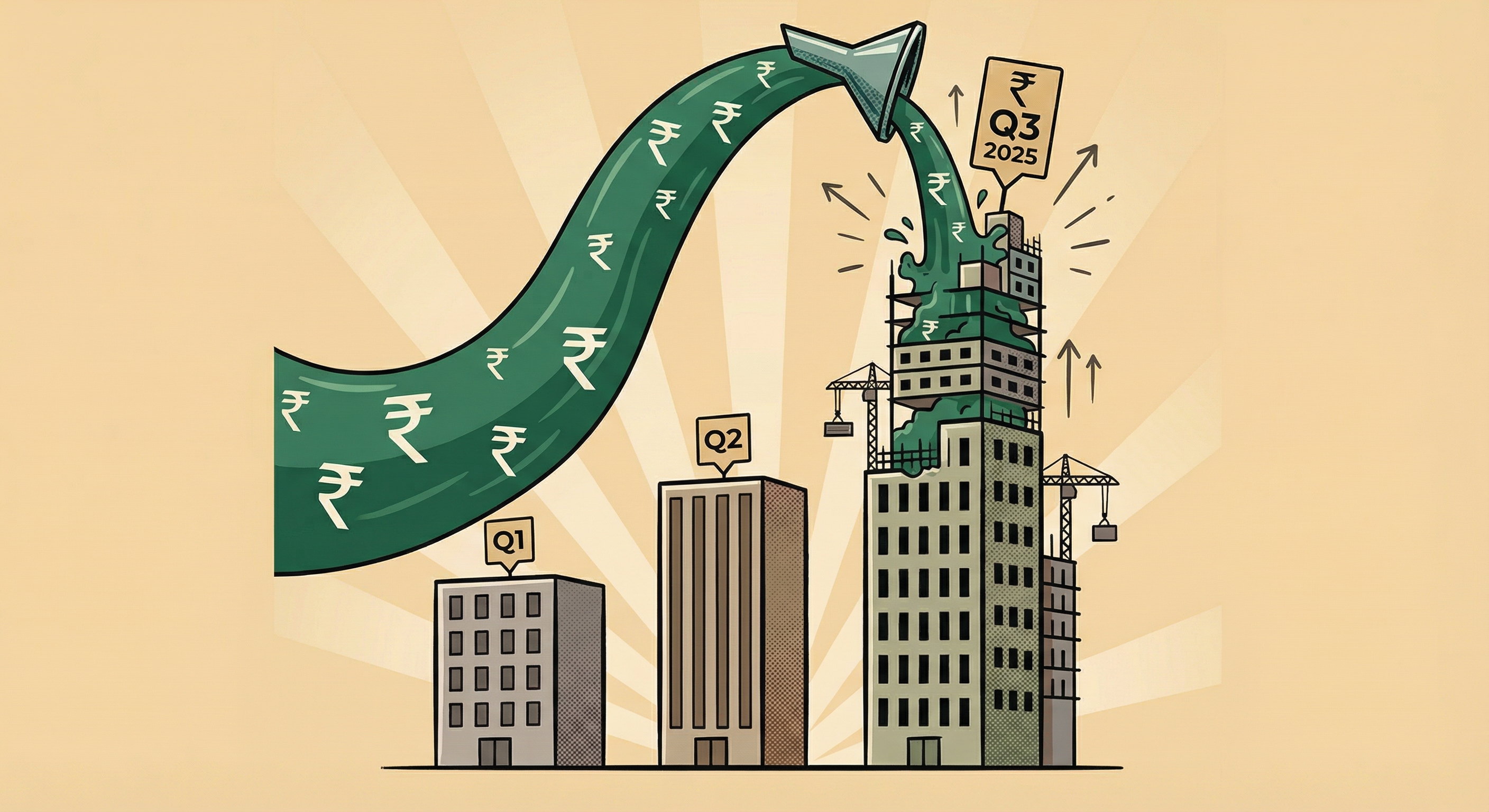
India’s real estate sector is entering a new era of consolidation, driven by a powerful surge in M&A real estate India activity that is reshaping ownership structures, strengthening portfolios, and attracting deeper institutional capital. The third quarter of 2025 has emerged as a milestone moment: 21 merger and acquisition deals in the property market recorded a combined value of ₹843 million, marking one of the strongest quarters India has seen in years. For a sector that has historically been fragmented, this acceleration reflects a structural shift from isolated, developer-led projects to professionally managed and globally aligned asset platforms.
Domestic Players Drive ₹838 Million Across 20 Deals
What makes the Q3 2025 numbers even more significant is the overwhelming dominance of domestic M&A momentum, with ₹838 million coming from 20 India-driven transactions. This indicates a major evolution in the mindset of local developers and investors, who are increasingly seeking scale, financial discipline, and operational synergy. Developers with strong balance sheets are acquiring stressed or underutilized assets, large platforms are consolidating retail and commercial portfolios, and institutional owners are restructuring holdings to create more stable income-generating vehicles. The Indian property sector is no longer dependent solely on international capital to fuel growth the consolidation cycle is now equally, if not more, driven by homegrown players.
Commercial and Retail Assets Lead the Consolidation Wave
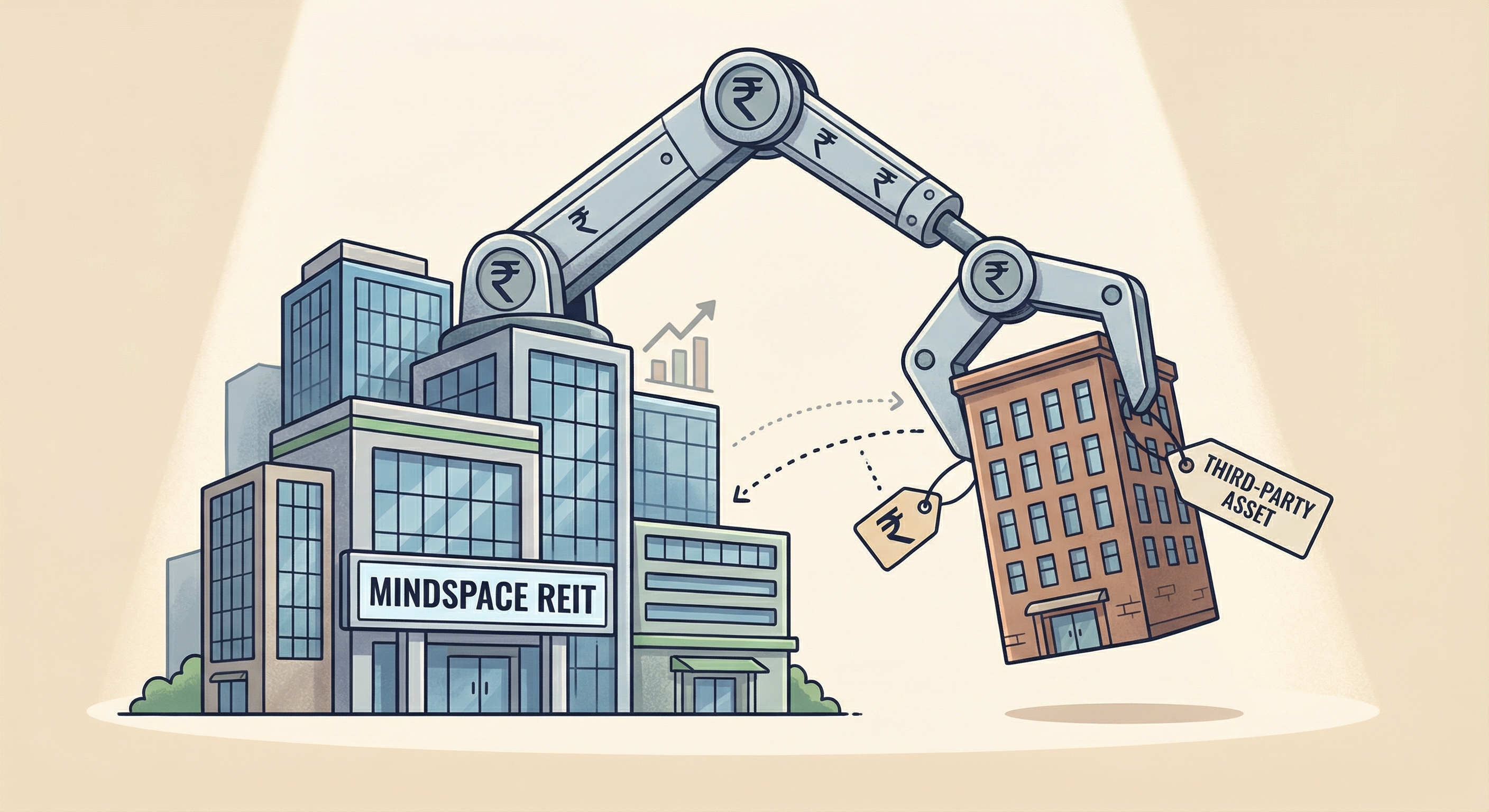
A major component of this boom is the rising appetite for commercial and retail real estate consolidation. Income-generating Grade A assets especially office parks, urban malls, warehousing parks, and mixed-use developments have become the preferred targets for both domestic and global investors. As consumption strengthens, organized retail expands, and India’s corporate ecosystem grows, these assets offer predictable yields and long-term leasing visibility. This is one reason why we’re seeing high-value transactions involving retail-led platforms, metropolitan malls, and office clusters. Investors today are prioritizing stability over speculative development, leading to more strategic acquisitions rather than new large-scale constructions.
Institutional Investors Reshape India’s M&A Landscape
Institutional investors are at the heart of this shift. Over the past few years, India has witnessed a dramatic increase in platform-level investments, portfolio buyouts, and real estate funds entering into merger and acquisition deals property developers once dominated. Global capital players are focusing heavily on stabilized, cash-flow-rich assets a trend reflected in the massive retail and commercial deals recorded this year. Their presence is pushing the sector toward greater transparency, professional governance, and global-grade asset management practices. At the same time, domestic institutions pension funds, sovereign-backed vehicles, and large corporate groups are stepping in to create diversified portfolios that can withstand market cycles, further deepening the market’s maturity.
Proptech Innovation Accelerates the Consolidation Movement
For a proptech ecosystem like the one emerging in Bengaluru, these trends are opening up a new wave of opportunities. As large-scale real estate consolidation continues, the demand for technology-driven solutions is expanding rapidly. Owners and investors now require smarter asset management tools, tenant analytics, digital leasing systems, and operational automation platforms to extract maximum value from their consolidated portfolios. From mall footfall intelligence to office utilization data, proptech has become central to modern M&A strategy, offering insights that influence valuations, leasing forecasts, and long-term return projections. For Propzine, this consolidation wave underscores the critical role that innovation will play in the next decade of Indian real estate.
A New Era of Strategic M&A for Indian Real Estate
The record ₹843 million in M&A real estate India transactions in Q3 2025 is not an isolated spike it is a reflection of a fast-maturing industry transitioning into a more stable, institutionalized, and globally competitive marketplace. With domestic players driving the majority of acquisitions and commercial assets leading strategic consolidation, the sector is heading toward a more structured and investment-driven future. As we move deeper into 2025 and beyond, India’s property landscape will continue to evolve through transformational mergers, strategic partnerships, and data-backed decision-making marking the beginning of a long-term consolidation cycle that reshapes how real estate is owned, operated, and valued.